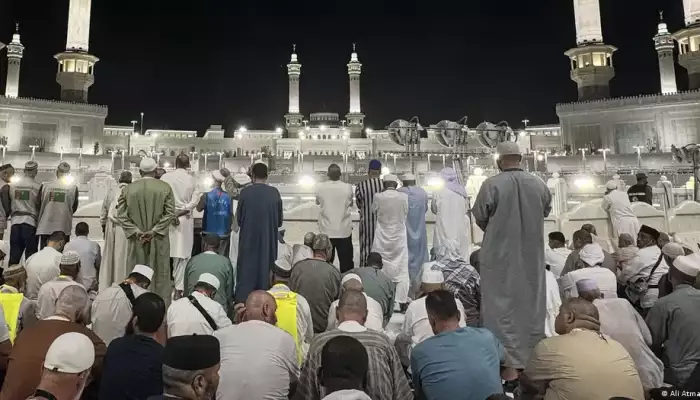
This year is the first time that Saudi Arabia has chosen to go ahead with the annual Hajj pilgrimage while it is also in the middle of a war that has seen direct strikes on Saudi territory.
The Hajj is a once-a-year event that draws millions of Muslims to Mecca in Saudi Arabia to perform rituals that every believer is supposed to carry out at least once in their lives, if they are able to. It is one of the largest gatherings of humans worldwide, and this year's Hajj runs between May 25 and May 29 with around 1.5 million pilgrims expected in Saudi Arabia.
Over the past three years, between 1.7 and 1.8 million have attended.
Historians say that over 14 centuries, the Hajj has only ever been canceled or restricted about 40 times; the last time that happened was during the COVID-19 pandemic in 2020.
Having more than a million pilgrims descend upon one place to perform the same ritual in under a week has always been a complex logistical exercise.
It has involved Saudi Arabia restricting crowds with a ticket lottery system for international pilgrims, tight security at pilgrimage sites, flights, accommodation, food and water and medical care, and all that amid high temperatures that have proven deadly in the past.
This year that exercise is being complicated by the Iran war, which began in late February when the US and Israel attacked Iran. Iran has responded by targeting the Gulf states, along with Israel.
There is a ceasefire in effect at the moment but it remains unclear how steady that is. Last weekend, Saudi Arabia intercepted three drones it says were likely launched by pro-Iran militias in Iraq.
US, European nations issue travel advisories
2026 also marks the first time the US government has urged its own citizens to reconsider participating in the pilgrimage, noting that "non-emergency US government employees were ordered to leave Saudi Arabia" in early March.
Germany, the United Kingdom and other European nations have also issued travel warnings for Saudi Arabia, strongly advising citizens against going there during the current conflict or if they do, then to monitor the situation closely. Several travel agencies in Germany that specialize in Hajj travel did not reply to DW's inquiries about how would-be pilgrims were reacting to those sorts of warnings.
But as Germany's Central Council of Muslims pointed out, in their experience pilgrims are often unaffected by current events.
"They are motivated by fulfilling a religious duty," a spokesperson for the council told DW. "For them, this is much more than a normal trip. And since planning for the journey usually takes over a year and is often associated with considerable financial commitment, made well before the outbreak of this conflict, the hurdle to canceling is very high."
The Central Council said it didn't hear about anybody from Germany canceling because of the Iran war and that, as far as they were aware, things had proceeded normally.
"While there was some uncertainty about how the situation might develop, the pilgrims stuck to their plans," the spokesperson said.
Countries that usually send the biggest contingents of pilgrims were also wary at first. For example, in March, Indonesia — which is sending 221,000 pilgrims to Hajj this year — told locals to delay their departure until there was more certainty about the outlook for the war.
But since then, Indonesia and other Muslim-majority countries have given pilgrims the go-ahead and assisted with travel and other services as usual. The Indonesian government said it has emergency evacuation plans it can activate if necessary, but this week state officials also announced they had themselves arrived in Saudi Arabia to help facilitate pilgrim services there.