Wednesday 06 / May / 2026
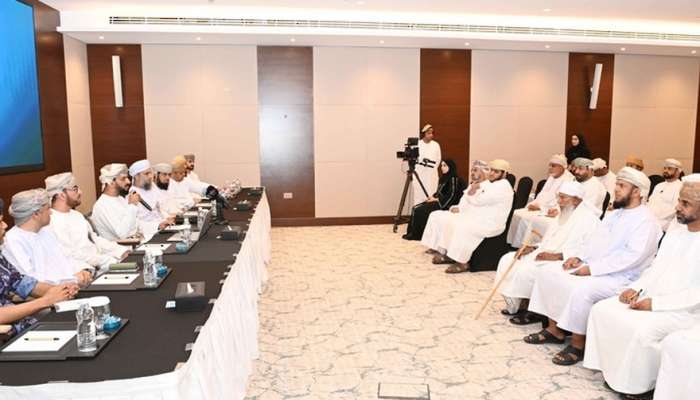
Muscat: Oman's official Hajj mission for the 1447 AH season held a press conference today to outline its key preparedness measures, organizational frameworks, developmental initiatives, and services for pilgrims from the Sultanate of Oman. The briefing also covered updates on transportation and crowd management, along with general indicators for the current season.
Ahmed Salim Al Rashdi, Undersecretary of the Ministry of Endowments and Religious Affairs and Head of Oman's Hajj mission for 1447 AH, stated that the Ministry's approach to managing the Hajj sector is grounded in a philosophy centered on enabling pilgrims to perform this sacred rite in accordance with Prophetic tradition, thereby fulfilling the sharia objectives of facilitation and the removal of hardship. He emphasized that the pilgrim remains the top priority across all services, with the application of the highest standards of governance, quality, efficiency, and transparency, in full integration with various local and international partners.
He added that the Ministry has continued to enhance its Hajj management system through an electronic platform for pilgrim registration, selection processes, and the procurement of company and service contracts. He noted that the system received an award as the world's best digital service for pilgrims, achieving a 99% satisfaction rate during the previous 1446 AH season. The platform has also contributed to greater fairness, transparency, and equal access for pilgrims based on precise and well-regulated eligibility criteria.
He explained that over 42,000 Hajj applications were submitted for the 1447 AH season, of which 14,000 were accepted based on approved eligibility standards. All accepted applicants have completed their travel requirements to the holy sites at a rate of 100%, including 13,560 Omani pilgrims and 440 resident expatriates. He noted that the overall satisfaction rate for the previous Hajj season stood at 97%, with the mission aspiring to improve upon this figure during the current season.
During the press conference, the head of the Omani Hajj mission detailed the structured eligibility sorting mechanism, system opening dates for those wishing to register for Hajj, notification procedures for eligible pilgrims across various priority stages, and the final deadlines for pilgrim entry into Saudi Arabia by land and air, in addition to updates on the second Hajj and Umrah Conference and Exhibition.
He mentioned that, following the issuance of new regulations by Saudi Arabia concerning the land transport of pilgrims, the mission immediately notified Hajj companies and initiated direct coordination with the Saudi Ministry of Hajj and Umrah. This aimed to mitigate operational and financial impacts on both companies and pilgrims while working to find alternative solutions to ensure seamless service delivery.
He also highlighted several signature initiatives for the 1447 AH Hajj season. These include the "Hajj Lab" Initiative, designed to enhance the Omani pilgrim's experience and develop a roadmap for future priorities, as well as the Aviation Initiative, which helped reduce airfare prices by approximately RO 40 compared to last season.
He noted that the share of land-based pilgrims decreased from 5,122 pilgrims in the 1446 AH season to 3,034 in the 1447 AH season. Another key effort is the initiative to expand pilgrim dispersal planning via land border crossings, which introduced a smart mechanism for real-time bus movement tracking and rapid emergency and crisis response. In addition, the "Awqaf Beit Al Rabat" Initiative raised over RO 200,000 for eligible beneficiary groups, while the "Hajj Company Readiness Enhancement" Initiative aims to raise performance efficiency and improve service quality.
He also announced the relocation of the Omani Hajj mission's headquarters to a new site characterized by its proximity to the holy sites, availability of modern logistical services, and lower traffic density—factors that will facilitate pilgrim access and enable more efficient operational execution.